
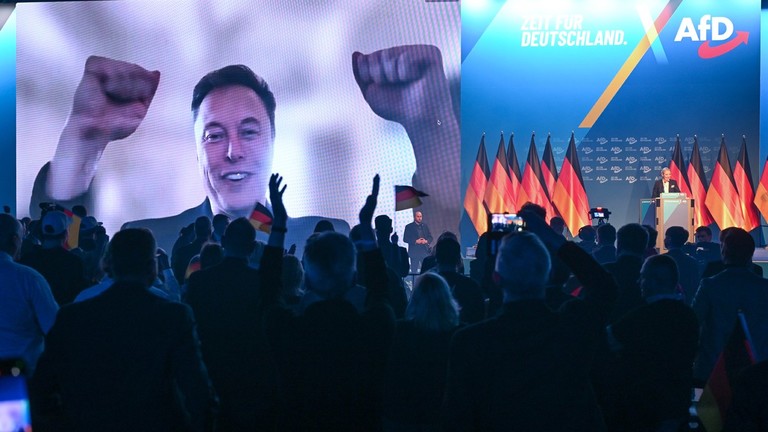
Elon Musk, the CEO of SpaceX and Tesla, made headlines this weekend by publicly declaring his full support for the right-wing Alternative for Germany (AfD) party during a campaign rally in Halle, Germany. Addressing the rally via video link, the U.S.-based tech mogul described the upcoming snap parliamentary elections as a critical turning point not only for Germany but for Europe and the world at large.
“This election is extremely important. I do not say it lightly when I think the future of civilization could hang on this election,” Musk said to an enthusiastic crowd of around 4,500 attendees, as reported by the Associated Press. The event marked the official start of AfD’s campaign and featured speeches from party co-leaders Tino Chrupalla and Alice Weidel, the party’s chancellor candidate.
Musk’s endorsement is significant, given his international influence and outspoken nature on political and social issues. In his speech, Musk urged AfD supporters to intensify their efforts in mobilizing votes, emphasizing the need for a collective push to bring about change. “I think it could decide the entire fate of Europe, maybe the fate of the world,” he stated.
The billionaire entrepreneur, who has often courted controversy for his polarizing opinions, expressed his belief that the German populace is eager for a departure from the status quo. He argued that the policies and leadership of the past decade have left many citizens disillusioned. Musk positioned the AfD as the vehicle for this desired transformation, calling on party loyalists to engage their social circles—“friends and family, one person at a time”—to join the movement.
The rally’s location, Halle, was chosen strategically by the AfD as a symbolic center of their campaign. Known for its growing support for the party in recent years, the city provided a fitting backdrop for the party’s opening salvo in the race to secure seats in the Bundestag. Both Chrupalla and Weidel used the occasion to present the AfD’s platform, which includes stricter immigration controls, a pushback against EU centralization, and a more nationalistic approach to policy-making.
Musk’s support for the AfD has sparked debate, as the party remains a highly divisive force in German politics. Critics accuse it of promoting far-right ideologies and fostering xenophobia, while its supporters praise its stance on national sovereignty and opposition to the political establishment.
This is not the first time Musk has waded into politically sensitive waters. The entrepreneur has a history of voicing his opinions on global matters, often leveraging his platform on social media to influence public discourse. However, his alignment with the AfD has drawn particular scrutiny, given the party’s controversial reputation and the implications of a high-profile endorsement from one of the world’s most recognized figures.
With Germany’s snap elections looming, Musk’s public backing of the AfD could sway voters in unexpected ways, amplifying the stakes of an already tense political climate. As the campaign heats up, the international community will be watching closely to see whether Musk’s intervention has a lasting impact on the electoral outcome—and, as he claims, the future trajectory of civilization itself.